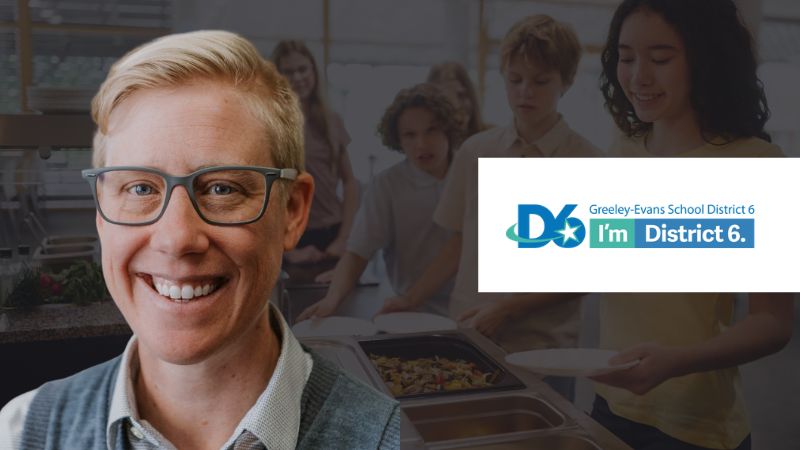
CHICAGO, March, 27, 2026 - More than 15,000 students in the farming town of Greeley, Colo., depend on Danielle Bock for what may be their only sound meal of the day. With that sort of responsibility, she’s not about to let hummus and yogurt go without a fight.
“Those are my go-to items,” explains the director of nutrition services for 35-school Greeley-Evans School District 6. If the federal government’s pending definition of ultra-processed foods (UPFs) should apply to the kid-pleasing products, Greeley-Evans would likely be pressured to decrease or halt their use. And that strikes Bock as a good intention gone awry.
In a career that extends back to waiting tables in a Perkins family restaurant at age 14, Bock has repeatedly tried to right the wrongs she’s seen in the business. Food insecurity soared in Washington state while the Colorado native was living there. Bock signed on with a local organization to provide people experiencing hunger with what they weren’t getting from the state or other usual sources of support.
She raised the amount of food distributed by Food Lifeline by 65%, to 35 million pounds annually.
After moving back to Colorado, Bock met someone with a connection to the foodservice programs at Greeley’s schools. He hired her, and she started fixing what she found.
Her efforts included pressing the district to use more local ingredients. It wasn’t an easy task. Although Greeley is an agricultural area, its main crop was and remains corn that’s refined into ethanol. Little acreage was devoted to what shoppers would find in the produce aisle of a supermarket.
Nevertheless, all 35 of the district’s schools now feature salad bars with unlimited servings.
The area is far from economically vibrant. Realizing that even reduced-price meals were beyond the wherewithal of many local families, Bock pushed Colorado to institute a universal free-meal program. She ended up writing the actual proposal, which was then put before voters as a ballot referendum. It was approved.
Today, every student in the state is entitled to a free meal. About 70% of the Greeley-Evans District’s 23,000 youngsters—some 15,000 individuals—regularly opt for the assistance.
All told, Bock’s department serves about 22,000 breakfasts, lunches, and dinners on a typical school day. “We’ve hit 26,000 twice,” says Bock.
As she rose through the ranks, becoming the director of nutrition services about nine years ago, Bock was also troubled by what she saw on the other side of the cafeteria serving line. Her employees were struggling to get by on what they were being paid.
That began a multi-year effort to raise the staff’s pay by 110%, to the level of a living wage. As a direct result, staff retention soared to 84%.
“It's my job to make sure my staff have jobs that are fulfilling and that they are paid a living wage,” says Bock. "That’s my passion. A good day for me is knowing that the staff went home happy and satisfied.”
She refers to them not as her employees but as her bosses—and her most important ones at that.
Bock’s activist approach to bettering the lives of students and staff figured into her selection as this year’s Silver Plate winner in the Elementary & Secondary Schools category, popularly known as K-12. Administered by IFMA The Food Away from Home Association, the Silver Plate program recognizes the year’s best foodservice operators in nine major industry segments.
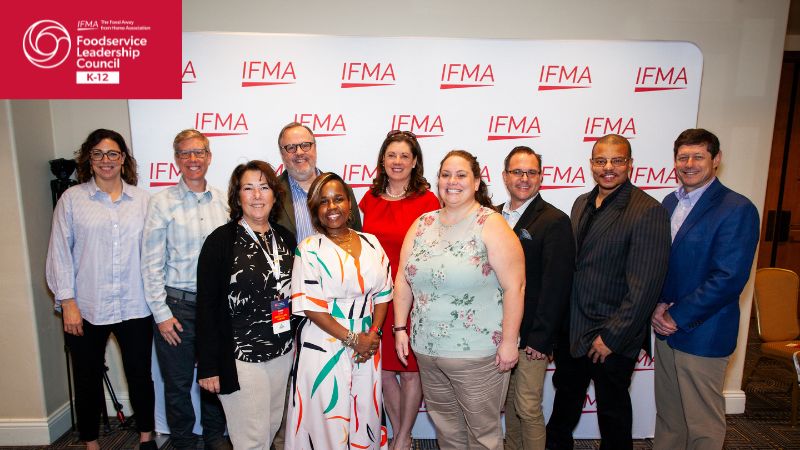
Bock is also serving as this year’s chairperson for the Association’s K-12 Foodservice Leadership Council, a discussion forum that allows Bock and school foodservice colleagues to share solutions on the common challenges they face.
The front-and-center concern for Bock at the moment is the possible impact of the Make America Healthy Again movement on K-12 foodservice. The big reveal is expected to come in April when the U.S. Department of Agriculture proposes new nutritional standards for schools participating in the National School Lunch Program.
The guidelines are expected to align with core tenets of the MAHA movement, including its condemnation of ultra-processed foods as health detriments to be avoided.
Bock fears that all UPFs will be demonized, regardless of any good they may be doing. She frets that a broad-brush approach will turn hummus and yogurt, her gold-star products, into villains.
"If I were able to serve hummus and yogurt daily to my students, I would be a hero,” declares Bock, noting that parents appreciate the nutritional value of a product their kids love enough to eat without prodding.
"But in reality,” she continues, “those are processed foods, and some could consider them to be ultra-processed foods.” Will that prompt USDA to impose limits on their use?
If that’s the case, Bock says, she intends to educate federal regulators on why restrictions would do more harm than good.
She hesitates a second before admitting the prospect of righting their misthinking already has her excited.
"I thrive in that environment of challenge,” says Bock.
As Managing Editor for IFMA The Food Away from Home Association, Romeo is responsible for generating the group's news and feature content. He brings more than 40 years of experience in covering restaurants to the position.