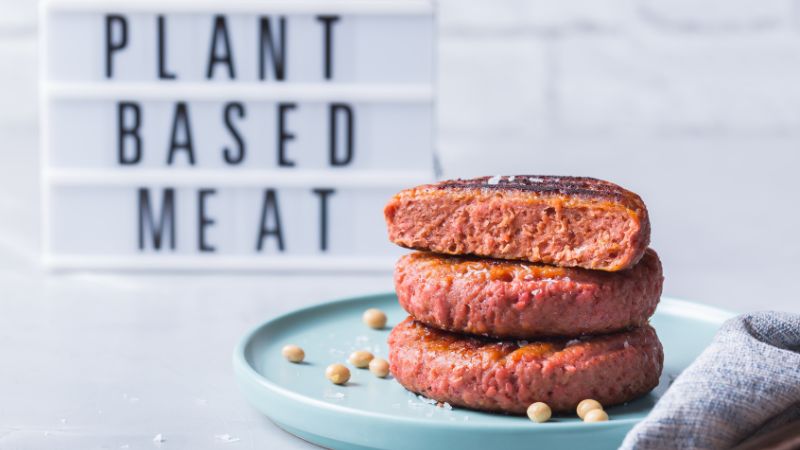
CHICAGO, April 17, 2026 — Plant-based meat analogs are falling out of favor in the food-away-from-home industry, with case orders dropping 4% in 2024 after years of rising purchases, according to the Good Food Institute, a proponent of sustainable dining practices.
Broadline distributors’ sales of mock burgers, sausage patties, cuts of chicken and other meat replacements fell 5%, the data show.
The drop-offs were steeper within the restaurant market than in onsite food-away-from-home sectors like healthcare and business-and-industry foodservices, the Institute noted.
Purchases of plant-based cheeses from broadline distributors fell 12% in terms of dollar sales and case volumes.
In contrast, sales of plant-based milks rose 9% in 2024, while broadline distributors’ sales of coffee creamers derived from plants like soy and almonds rose 5%. The Institute found that coffee additives derived from plants accounted for 31% of the total foodservice creamer market that year.
Similarly, the nonprofit found that purchases of plant-based egg substitutes rose 28% by sales and 30% by volume. It noted, however, that the foodservice component of the egg alternative market remains small.
The Institute attributed analog meats’ drop-off in popularity with the foodservice industry largely to price. Meat lookalikes derived from pea proteins or other vegetable material can be significantly more expensive than the animal meats they replace, according to the group.
Its findings suggest operators and consumers are balking at paying a premium for plant-based products’ claimed health and environmental benefits.
The Institute also noted that consumers are put off by the items’ production in factories. They’re perceived as being ultra-processed and less beneficial environmentally and health-wise than fruits and vegetables served in more natural form.
But availability could also be a factor, it noted. The Institute cited a separate study that found 71% of consumers aged 18 to 59 are willing at least to try plant-based meats or dairy substitutes.
More than 1 in 10 of the surveyed consumers indicated they would devote more consideration to eating meat analogs if they were more prevalent on restaurant menus.
The slowdown reported by the Institute for 2024 followed four successive years of 4% increases in sales within service.
“Foodservice is key channel,” the Institute’s report concluded.
The sales slowdown it highlighted was reflected in the 2025 financial results for Beyond Meat, a pioneer in the meat analog market. Revenues fell 15.6% last year, to $275.5 million.
EBITDA, or earnings before interest, taxes depreciation and amortization, fell $178.4 million before the breakeven point, trimming net income to $219.9 million.
The research underlying the Good Food Institute study was conducted by Circana.