CHICAGO, April 2, 2026 — Here’s a roundup of food-away-from-home news that might have slipped past even avid media watchers.
Chili’s chops on Ruth’s Chris for its fancy dress standards
After a fit of trash talk about the way McDonald’s CEO bites into a burger, restaurant chains are sniping at one another again, this time over what they advise customers to wear.
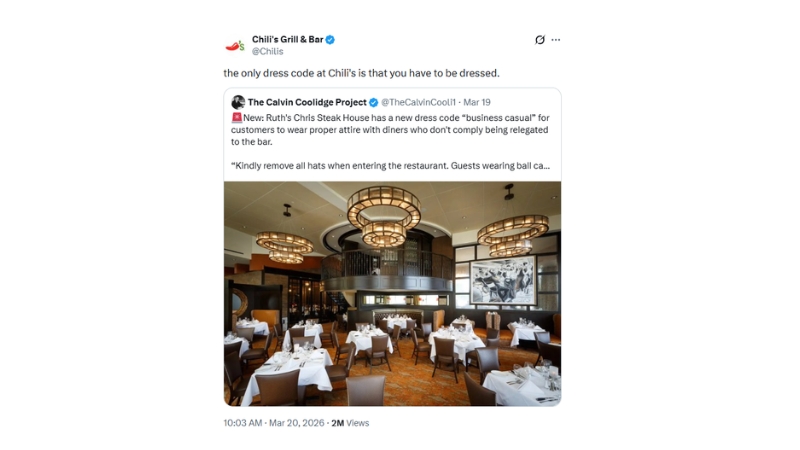
The first verbal salvo was fired after the Ruth’s Chris steakhouse chain spelled out its dress code on the Darden Restaurants-owned brand’s website. Patrons were advised to remove their hats upon entering a Ruth’s dining room, and to avoid baseball-style caps altogether if they don’t want to be banished to the bar.
Diners were also directed not to wear gym togs or tank tops, and to ensure their underwear isn’t exposed by an excessive sag to their trousers.
Chili’s, a far more casual concept, couldn’t resist the opportunity to emphasize its informality. “The only dress code at Chili’s is that you have to be dressed,” the Brinker International chain retorted on the X social media platform.
The post triggered a spirited conversation among social media users. The back-and-forth touched on everything from the two restaurant chains’ profoundly different pricing to which concept offers the better meal.
The teapot tempest followed a wave of video posts that showed the CEOs of several restaurant chains robustly biting into one of their brand’s signature burgers. The posts mocked McDonald’s CEO Chris Kempczinski for the unimpressive chunk he took out of McDonald’s new Big Arch burger in a social media video introducing the half-pound sandwich. The detractors characterized Kempczinski’s first bite as a mere nibble that he had to choke down.
Labor has a new minimum-wage battle cry: 30 by ‘30
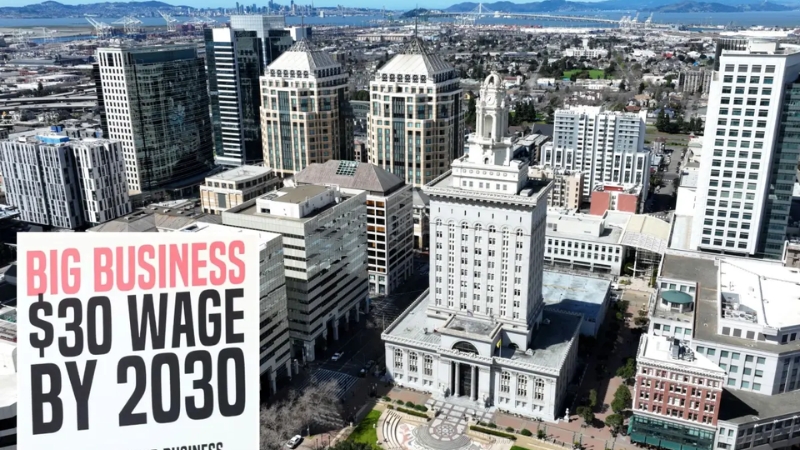
The forces behind the Fight for $15 crusade for a so-called living wage are throwing their considerable resources into a new drive to hike foodservice wages, this time sounding the rallying cry “$30 by ‘30.”
A bill currently before the New York City Council would set $30 an hour as the minimum wage for all local businesses that employ at least 500 people, effective 2030. Smaller operations would need to pay at least $29 an hour by 2031.
New York City’s minimum wage is currently $17 an hour.
The new wage proposal has emerged as a major priority of local labor groups, including the Big Apple branch of Service Employees International Union (SEIU), the backer of the Fight for $15 initiative. It also has the support of New York Mayor Zohran Mamdani, who campaigned in part on increasing the local minimum wage to $30, or what he termed a true living wage.
The call for raising the wage rate to $15 an hour was first sounded by an SEIU-funded group in New York in 2012 and eventually rolled westward all the way to California. It was regarded as a radical and wholly unfeasible notion at the time it was first aired.
Today, 17 states and the District of Columbia have minimum wages of $15 or more per hour, with two more scheduled to raise their rates to that level later this year.
The contracts of workers employed by hotels in and around Los Angeles International Airport call for a pay hike to at least $30 an hour by 2028, or what is believed to be the highest rate in the country. The increase is intended to provide workers with a share of what Los Angeles expects to be a boom in business from hosting the Summer Olympic Games in 2028.
Restaurants helped TSA agents stay fed
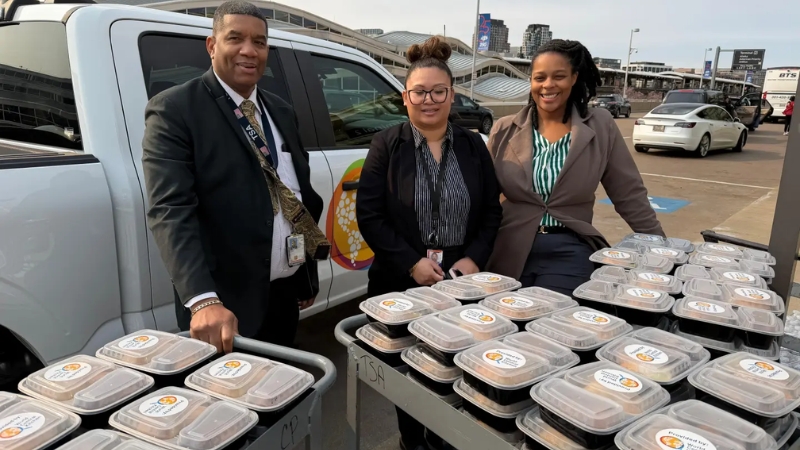
While their pay was held up by politics, airport security agents were denied the cashflow to cover even necessities like food. The lucky among them found help from restaurants willing to keep the officers fed with free meals.
The benefactors were typical mom-and-pops, not the industry’s chain giants. Mexico Restaurant in Richmond, Virginia, for instance, reportedly provided $8,000 worth of gift cards to agents of the Transportation Security Administration (TSA).
The Brit Pub, Codswallop Fish and Chips, and Poor Richard’s in Colorado Springs provided a free meal to anyone who could show a TSA ID. Poor Richard’s extended the offer to anyone who was furloughed by the federal government while the TSA and its parent administration awaited Congressional approval of their fiscal 2026 budgets.
Street to Kitchen, a Thai restaurant in Houston, has teamed up with Jose Andres’ World Central Kitchen to provide more than 100 meals on a regular basis to TSA agents in need. The free food is distributed to officers who worked without pay in the city’s two airports.
TSA’s funding for 2026 has not yet been approved. Congressional Democrats have refused to OK the financing until curbs on aggressive enforcement efforts by Immigration and Customs Enforcement (ICE) agents are put in place. Republicans in the House and Senate have refused to grant the restrictions, and President Donald Trump has alerted Congressional leaders that he won’t sign the funding bill unless lawmakers also impose new guarantees that only legally eligible voters are allowed to cast a ballot. The standoff has now extended beyond 44 days.
President Trump agreed last week to get TSA agents paid retroactively through an executive order.
Chick-fil-A operator’s trick to discourage cellphone use
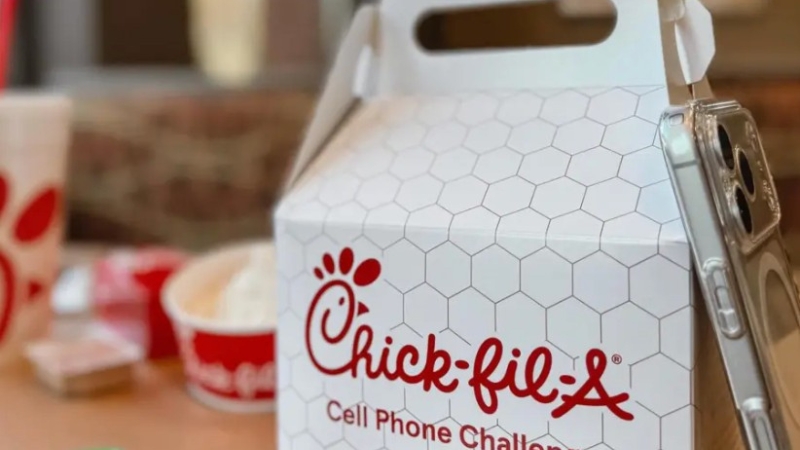
A two-unit Chick-fil-A operator in Georgia is drawing attention with his homegrown method of enticing guests to put down their cellphones during a visit.
Brad Williams asks guests to turn off their devices and store them in a temptation-defeating cardboard box that he calls the cellphone coop. Patrons who leave their phones untouched throughout the meal are rewarded with a free ice cream cone.
The technique has drawn the attention of media throughout the nation, including this report in a New York City tabloid.
Locals look for ways to benefit from soccer’s World Cup
With the FIFA World Cup soccer competition due to start in the U.S. about 10 weeks from now, restaurateurs and local lawmakers are looking for ways to capitalize on what may be the world’s most-popular sporting event.
One of the notions that’s been floated is suspending eating and drinking places’ usual mandated closing times. Expanded hours of operation would allow the establishments to capture sales from fans whose favorite teams are playing in a different time zone. A match hosted at a site on the East Coast of the U.S. could air before bars in California are permitted to open.
Legislation under consideration in Rhode Island, for instance, would allow liquor-licensed establishments there to remain open around the clock from the commencement of the games on June 11 through their conclusion on July 19.
All of the games will be played in the U.S., Canada, and Mexico.