CHICAGO, May 6, 2026 — Foodservice management firm Compass Group North America has taken its mission to reduce food waste very seriously for the last 10 years, with the goal of cutting its food waste footprint in half by 2030.
But as the Charlotte, North Carolina-based company marked a decade of celebrating its Stop Food Waste Day late last month, it decided to give its food waste-prevention efforts a turbo-charged boost.
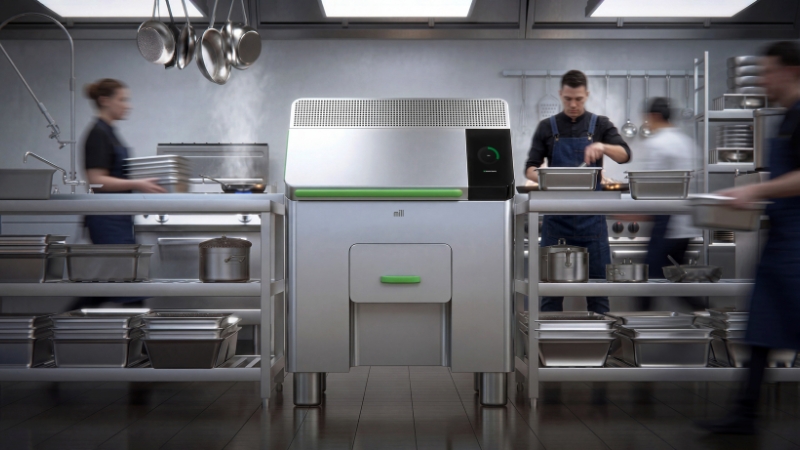
Compass Group announced a strategic partnership with Mill Industries, a high-tech food waste reduction company, to deploy specialized equipment to Compass campuses that decreases the volume of food scraps by up to 80%.
“A third of food is wasted … One in seven Americans are not quite sure where their next meal might come from and, sadly, that number is increasing,” said Amy Keister, global director of sustainability for Compass Group.
The Mill Commercial system builds on the work Compass has done with its Waste Not 2.0 tool, which was developed by Compass chefs. That tablet-based, digital food-waste tracking program has been in use for the last couple of years, allowing kitchen teams to identify waste-reduction opportunities while also analyzing, measuring and reporting the carbon impact of kitchen waste.
In 2025, Compass Group kitchens in North America reduced their total food waste 11% over the year before.
“It takes less than 12 seconds to record,” Keister said. “We didn’t want our chefs having to spend a lot of time … So our tool was all about behavior change.”
The tool employs AI-enabled computer vision that can take pictures in the kitchen and create reports behind the scenes to determine the root causes of food waste.
Compass plans to expand on that tool in a big way next year with the deployment of Mill Commercial in some of its universities, corporate campuses, hospitals, stadiums and other locations.
The machinery processes food scraps via heating, drying and grinding, turning chicken bones, banana peels and just about everything else into a shelf-stable material that looks like coffee grounds. The end product, which retains the nutritional value of the food, can then be used as animal feed, soil amendment or compost nutrients.
The Mill Commercial devices are outfitted with AI to help operators understand what is being discarded and, hopefully, reduce that waste.
Keister has been testing a home version of the Mill Commercial device for the last two years. Every couple of months, she sends off the dehydrated grounds made from her food scraps.
The grounds go to a farm in Washington to become chicken feed. And then Compass, in turn, buys chickens from that farm, she said.
“This is really, really sleek,” she said. “It’s easy.”
After 10 years in the food-waste reduction game, Keister offered up some advice for chefs and kitchen operations that may be newer to the concept.
“I would start with your chefs and make sure everyone’s aware,” she said. “Once you empower people with the awareness … people think differently.”
That awareness should extend to menu planning.
“We have a rule of five,” she said. “It’s not saying what ingredients to bring in. It’s just saying, if you’re bringing an ingredient in, make sure you’re using it five ways for that week’s menu.”
Heather Lalley is the director of communications for IFMA The Food Away from Home Association. A lifelong journalist, Lalley has previously worked with industry publications including Restaurant Business, CSP Daily News, Supermarket News and Foodservice Director.