Womens History Month Series Sponsors
BSI, LLC | Cargill | The Coca Cola Company | The Hershey Company | Nestlé Professional Solutions | P&G Professional | Unilever
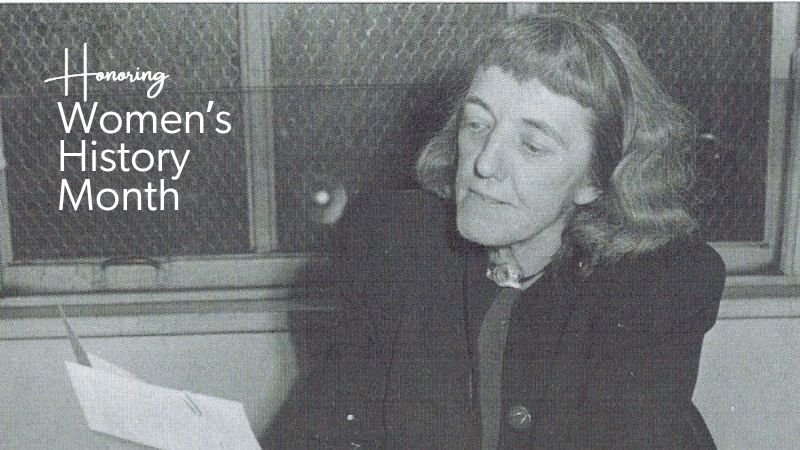
A name like Clementine Paddleford isn’t easy to forget. Nor is a long professional life of piloting her own Piper Cub from one backwater location to another, looking for local dishes that were as enticing as anything the swells of New York City were savoring in their city’s famed fine-dining restaurants.
Being a woman who refused to write like one, or at least how their male peers thought they should, was as much a point of difference as her reliance on a tracheotomy tube to speak, the result of beating cancer at a time when few victims could make that claim.
Her dispatches for the women’s sections of New York’s most influential newspapers weren’t the usual pearls of advice for impressing a husband at mealtimes. She was more likely to recount how goulash was Americanized by the scarcity of paprika in many areas of the country during the first half of the 20th century. The pieces read more like an adventurer’s narrative than a chef’s how-to tutorial.
In the opinion of many who came after her, Paddleford was the nation’s first food writer. They note that she was among the first to tell the colorful story behind a dish or ingredient instead of just recounting how to cook it.
Some even contend she set a path for today’s army of citizen restaurant reviewers. Paddleford had no formal culinary training, and her reports from the field would blend in first-person details about her discovery of a dish. The experience was recounted through her eyes, often with a dash of sass.
Yet Paddleford is seldom mentioned today with the reverence given the likes of Anthony Bourdain, M.F.K. Fisher, Julia Child, or the other gods of the field.
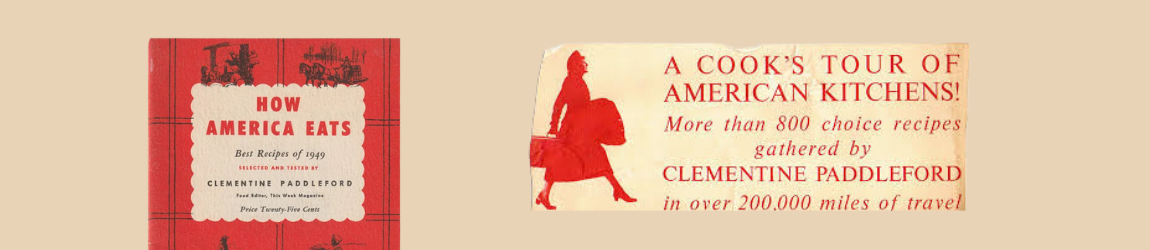
Part of that is just the dimming effect of time. Paddleford’s crowning achievement was the publication in 1960 of a best-seller called How America Eats, drawn heavily from the 800,000 miles she logged in tracking down favorite local dishes.
She would continue to write for mass-circulation publications for just a few additional years. Unlike many of her contemporaries, she did not make the transition into tv food reporting.
She would die in 1967 at age 69.
Although Paddleford would spend most of her life in New York City, she was born a farmgirl. Her family owned a 200-acre farm near Stockdale, Kan. Journalism interested her more than the family business. She would study at a local agricultural college before moving to New York and resuming her journalism education at Columbia and New York University.
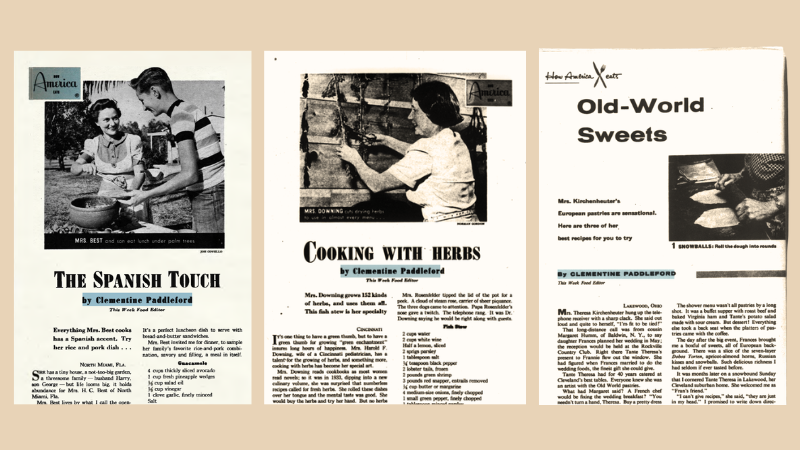
She managed to land an editorial job at the New York Herald Tribune, a newspaper with a reputation for fostering good writing. It is not clear if she was drawn to food writing or if she was assigned that function. But she would go on to write about regional and ethnic food for The New York Telegram, New York Sun, Gourmet magazine, and This Week.
According to The New School, which held a commemoration in 2012 of Paddleford’s contribution to food writing, she would earn $250,000 annually in her salad days—a princely sum at the time.
She would write eight books in total. Her signature work, How America Eats, is for sale on Amazon for $100.