Courtesy of Fraunces Tavern® Museum
The celebration of the nation’s 250th birthday will wind down after July 4, but the historically minded won't have to wait for another milestone anniversary to learn more about restaurants’ influence on American life. Slices of the business’ past are served up at several sites that recreate what a dining experience was like at various times in U.S. history.
Here’s a sampling.
Fraunces Tavern & Museum,
New York City
Courtesy of Fraunces Tavern® Museum
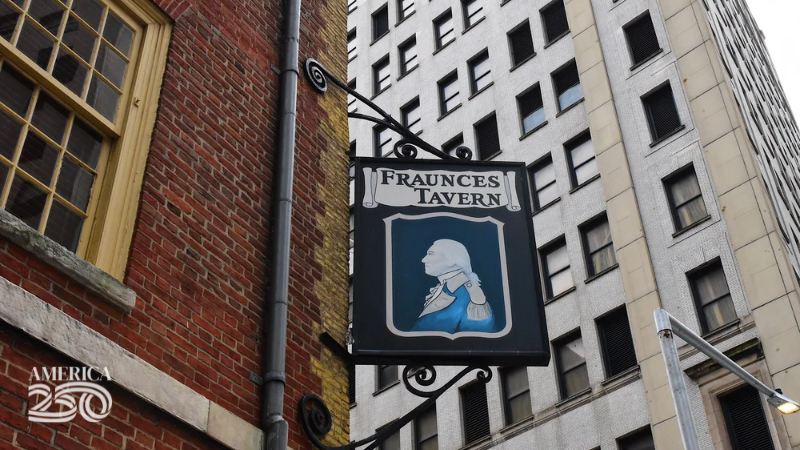
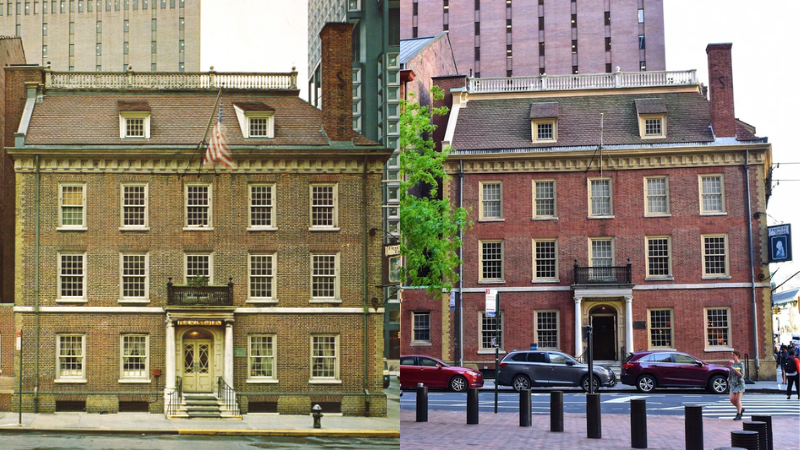
A favorite gathering place of the Colonial rebels is still in operation as a restaurant some 264 years after the first tri-cornered hat was removed at its front door. The second floor of the facility, reputedly the oldest building in New York, has been converted into a museum that shows how a table was set back in George Washington’s day. The Tavern was where he gave his famous farewell address to the victorious officers of the Colonial Army after they routed the British.
In the years beforehand, the inn was a place of intrigue and considerable spying. Proprietor Samuel Fraunces was a willing host of British army officers while the red coats occupied Manhattan, but his sympathies were clearly with the rebels. He would listen to the conversations and relay actionable tidbits to Colonial leaders hiding out on boats.
A visit isn’t exactly a hardship. The modern-day Fraunces Tavern has a highly favorable review on most citizen-reviewer sites.
Food: Transforming the American Table,
Smithsonian Institution, Washington, D.C.
Smithsonian Institution
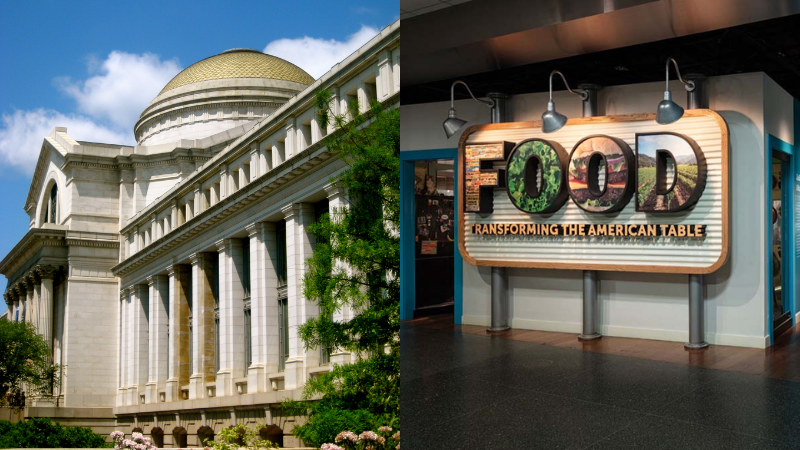
A permanent exhibit within the Smithsonian, America’s official attic, is this look back at how America’s romance with food has shaped U.S. life since the end of the Second World War.
Included is the reassembled former home kitchen of the late culinary demigod Julia Child, replete with the original furnishings and cooking implements.
American food manufacturers and the domestic supply chain aren’t overlooked in the presentation. The exhibit looks at the advances in production, distribution and ways of accessing food as well as the trends that shaped the food-away-from-home business.
Southern Food and Beverage Museum,
New Orleans
Kent Wang / Flickr, "Southern Food & Beverage Museum," 11 January 2009.
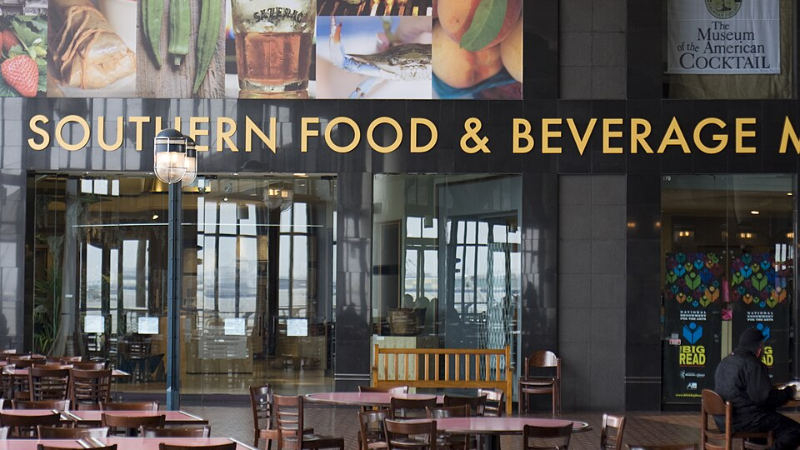
A state-by-state look at how the South has changed American dining is one of the highlights of this center in the heart of NOLA. It began as a pop-up attraction, featuring kitchen and restaurant artifacts that had been donated by a few local trackers of the Delta’s contribution to American dining. That venture triggered a fit of attic rummaging by other members of the vibrant local culinary scene, and a full-fledged museum was established.
As an added attraction: The facility shares space with the Museum of the American Cocktail, a one-of-a-kind facility that traces the rise of American mixology.
Chuck Williams Culinary Arts Museum,
Napa, California
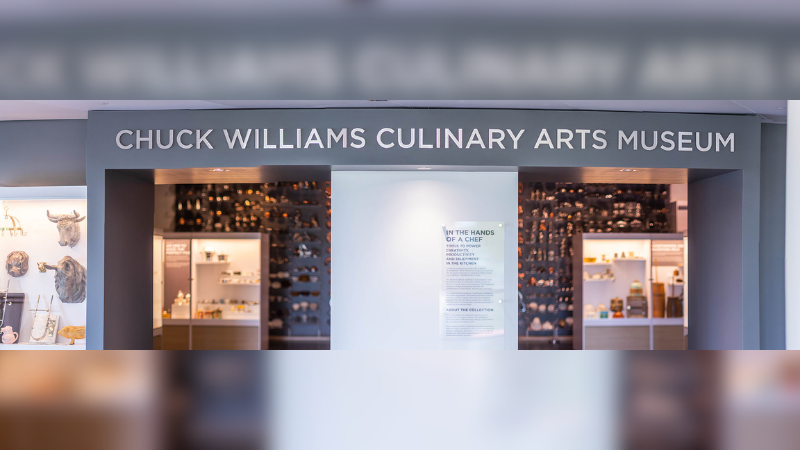
The Culinary Institute of America
An estimated 4,000 food prep and serving artifacts are on display in this celebration of the kitchen tools and tabletop devices culinarians have embraced to produce top-quality fare in efficient fashion.
Most were collected by Chuck Williams, the Williams of home goods retailer Williams Sonoma and a devoted promoter of food culture until his death in 2015.
The museum is located at the Culinary Institute of America’s Copia campus, host to a full calendar of food and wine-focused special events.
Product-specific museums, various
If there’s a particular food item that’s a favorite, chances are there’s a museum devoted to it. Among the most famous is the Spam Museum (Austin, Minnesota), a cultural facility dedicated to the well-known canned meat, and Hershey’s Chocolate World (Hershey, Pennsylvania), an homage to chocolate. But there are also museums dedicated to specific condiments (National Mustard Museum, Middleton, Wisconsin), and Jello (Jell-O Gallery, Le Roy, New York).
There are two devoted to potatoes: The Idaho Potato Museum (Blackfoot, Idaho) and the Potato Museum (Albuquerque, New Mexico), which takes more of an agnostic approach in tracing the tuber’s importance in American dining.
Want more?
If you’re still hungering for more food-away-from-home history, check back for two features we’re launching on Foodaway.org, the website of IFMA The Food Away from Home Association.
Starting this fall, we’ll feature a look back on a regular basis at a historical development that shouldn’t be forgotten by today’s food-away-from-home business.
Simultaneously, the page for our educational arm, the Education Foundation of IFMA The Food Away from Home Association, will begin airing profiles regularly of a foodservice stars whose standout performance earned them a Silver Plate, the industry’s highest segment honor.
Stay tuned for details.
As Managing Editor for IFMA The Food Away from Home Association, Romeo is responsible for generating the group's news and feature content. He brings more than 40 years of experience in covering restaurants to the position.