Sponsored by P&G Professional
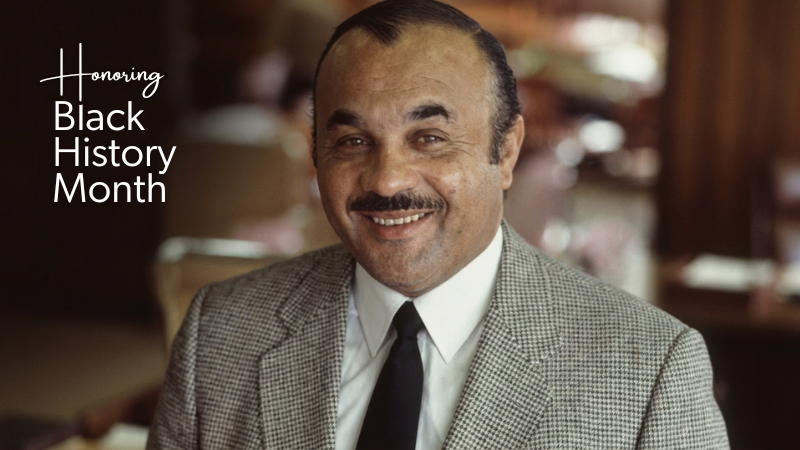
Photo Credit: The Chicago Crusader
Eight months after Rev. Martin Luther King, Jr., was assassinated, racial tensions were still running high within Chicago’s predominantly Black South Side. Eleven people had died in the riots that erupted there after the civil rights leader had been murdered in April of 1968, prompting Chicago Mayor Richard Daley to ask that federal troops be sent to quell the violence. The move only served to fan some residents’ emotions.
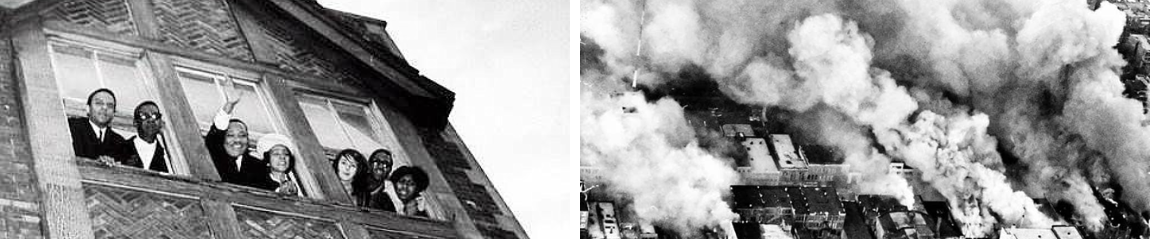
Photo Credit: Left Lawndale Christian Development Corp MLK in North Lawndale 1966 | Right: Fair Use Chicago West Side Burning MLK Riots 1968
Among the businesses that operated within the Windy City neighborhood was an outlet of McDonald's, a southern California transplant that now called Chicagoland its homebase. It was not the unit would-be franchisees were shown to sell them on the concept. Years later, a multi-unit supervisor would write that he couldn’t recall a single piece of kitchen equipment working as it should. Nor did the air conditioning. He remarked that the best option for the store appeared to be a wrecking ball.
Enter the barber who ran a busy shop down the street. Herman Petty saw the potential of the Golden Arches and came forward with an overture to become the store’s franchisee. He was sure he could turn the store into a standout operation and a positive force for the neighborhood.
There was one issue: Petty was Black.
Many balked at the idea because of the racial mindset of the day. McDonald’s, including its franchise community, was all White, as was a quick-service industry that was growing at the time by leaps and bounds. Would a move like that stoke racial tensions that were already at a fevered high? And how would less-enlightened customers react?
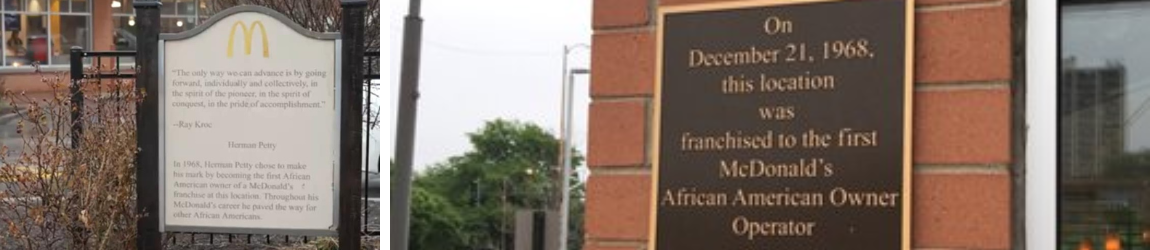
But McDonald’s patriarch, Ray Kroc, saw how the world was changing. Wouldn’t someone from the South Side, and a successful local businessman at that, know how to serve the community and ensure the restaurant became a moneymaker? And how could the chain stand by while its hometown was riven by racial strife?
Kroc decided the time was right, for business and social reasons, for his brainchild to do something. He personally intervened to ensure Petty became the chain’s first Black franchisee.
But that didn't end the resistance aimed at Petty. He needed $125,000 to buy a franchise, and lending institutions had their own prejudices. To get the funding, Petty had to team up with two passive White investors in what was openly known at the time as a “zebra" or “salt-and-pepper" deal.
Kroc’s business assessment was accurate. The unit quickly became one of the most successful in the McDonald’s system, enabling Petty to buy out his investors. He would go on to acquire at least seven more franchised McDonald’s stores. A man who couldn’t secure a $125,000 loan became a millionaire.
By all accounts, Petty’s success changed the thinking within McDonald’s headquarters and beyond. The Golden Arches began actively recruiting Black franchisees. Many competing restaurant brands would follow, but in time.
Petty would go on to found the National Black McDonald’s Operators Association in 1972. It was another step in McDonald’s emergence as a leader in creating opportunity for women and members of minorities. As of 2023, 33% of the chain’s domestic franchisees identified as Black, Hispanic or Asian, according to the company.
Petty died in 2009. The restaurant he bought, at 6560 South Stony Ave., is still open. Photographs of the one-time barber and bus driver adorn the walls.

In 2022, as a thank-you for what he gave the neighborhood, a section of a main road in the area was renamed “Herman Petty Way.”
In addition, a room in the Obama Presidential Center is scheduled to be named in his honor. The facility plans to open in Chicago’s Jackson Park area in June.