Sponsored by BSI
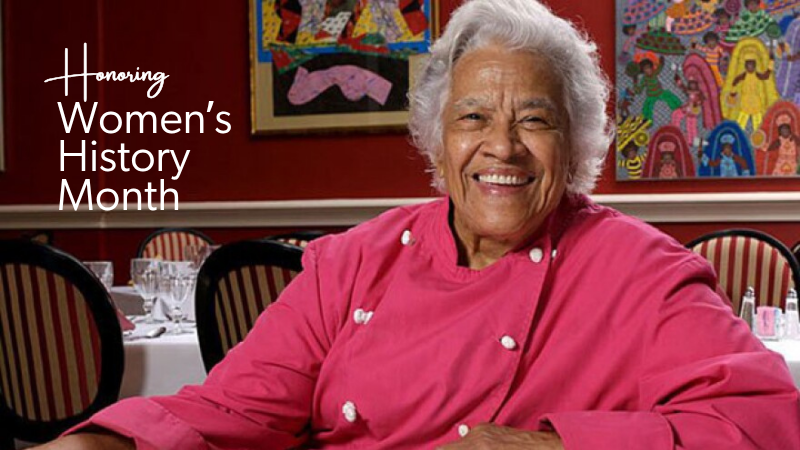
In the Jim Crow South of the 1950s, civil rights proponents could be killed for openly supporting the movement. But not if you were Leah Chase, longtime chef-proprietor of New Orleans’ Dooky Chase restaurant. For much of the 20th century, and a good part of the 21st, she was arguably better known in her home city than its mayors, and possibly more influential.
That’s why she agreed to host a meeting between a then-unknown Southern preacher named Martin Luther King and veterans of a bus boycott in Baton Rouge, La. King and his followers hoped to mount a similar pressure campaign in Montgomery, Ala., where a Black seamstress named Rosa Parks had been arrested for refusing to give up her seat on a public bus to a white person. sitting in the whites-only section of a public bus. As she later remarked, “I was, was tired of giving in."
Other establishments might have been torched for abetting such a bold challenge to racial segregation. The Montgomery boycott is regarded by many historians as the trigger point for the civil rights movement. King and Parks would become national icons for their courage and commitment.
But allowing the historic event to be plotted on her premises was just another instance of Chase using her prominence to right what she saw as wrong. Her skill in the kitchen had won her the business and respect of everyone from presidents to movie stars to the leading social pundits of the day. That renown was her leverage for pushing change both within and beyond the four walls of her restaurant.
And if someone didn’t like finding that sort of steel in a Black woman, too bad. They could get their gumbo elsewhere. It’d mean more seats for the widely diverse crowd that ate at Dooky Chase—Black and white, rich and poor, locals and international stars.
The restaurant was a virtual community center for Treme, a predominantly Black and underprivileged neighborhood of the Big Easy. Because so many regulars lacked bank accounts, Chase would cash their paychecks for them at the bar on Friday nights.
Others came to allay their frustration as artists. Showings of African-American art were rare in the formal gallery world. Dooky Chase became the place to have your work seen, and there was the chance Leah would add it to her extensive collection.
The place was also a hangout for musicians, the peers of Leah’s husband and restaurant namesake Dooky Chase.
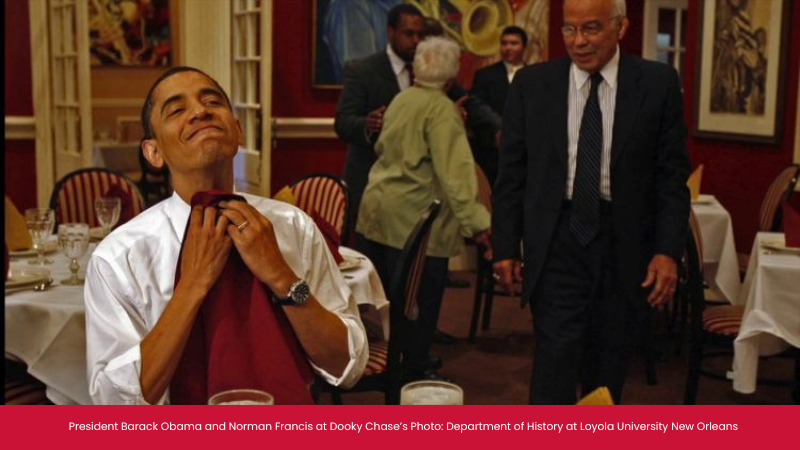
Just watch your manners if you ate there. Leah famously chastised a first-time visitor for daring to shake some hot sauce into his gumbo before tasting it. No matter that his name was Barack Obama and he was successfully running for the presidency of the United States at the time.
Her road to fame and appreciation wasn’t an easy one. Leyah “Leah” Lange was born in 1923 to a family of either eight, 10, or 14 children, depending on what source you use.
The clan lived on a small farm in the segregated town of Madisonville, La. Her father was a caulker at a nearby shipyard. In addition, his family owned a 20-acre strawberry farm. Leah would often volunteer to pick the berries because it spared her from having to cook, an activity she loathed at the time.
The family was devoutly Catholic. Leah attended the local parochial school for Black children, but there was no Catholic high school in the area. It was decided that Leah would be relocated to relatives in New Orleans so she could attend St. Mary’s Academy. She moved there alone at age 13.
After high school, Leah took a number of entry-level jobs that likely worried her religious family. At one point, she was chalking the board that a local bookie used to let customers know the odds on the horses running that day at a nearby track. She also managed amateur boxers.
Among the jobs she decided to try was waiting tables at two local restaurants. It quickly became her favorite.
Along the way, she met Edgar “Dooky” Chase, a well-known local musician and band leader. They would marry in 1946, when Leah was 23.
Chase’s family owned a little shop at the time where Treme residents could buy lottery tickets and po’ boy sandwiches. Dooky and Leah eventually took it over and expanded the menu to include the Creole specialties Leah knew from her youth. Cooking became a passion for her, as did socializing with the customers.
Raves about the food drew the attention of residents from throughout the city, white and Black. The Chases didn’t care. In a challenge of the Southern mindset, they integrated their restaurant’s dining room. It wasn’t a policy they adopted on the sly. Indeed, it added to the restaurant’s uniqueness.
Dooky Chase became one of the restaurant-rich city’s most popular establishments. Politicians campaigning through the South had to stop there. The place also drew such entertainment, sports, and literary stars as Ray Charles, Lena Horne, Hank Aaron, and James Baldwin.
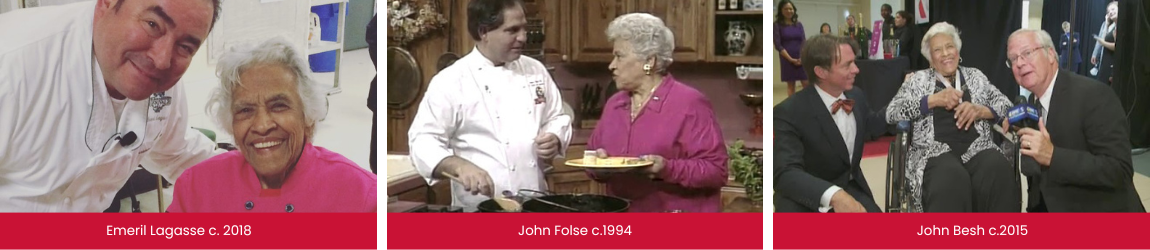
The authenticity and caliber of Leah’s Creole fare also made her a favorite of big-name local chefs like Emeril Lagasse, John Folse, and John Besh.
The fame of Leah and her restaurant would continue to grow for decades. Then the establishment and much of its host city were destroyed by Hurricane Katrina.
The Chases lived in the restaurant’s host building. The storm wiped out restaurant and bedroom alike. The couple lived in a FEMA trailer for over a year as their home and business were rebuilt with help from the local community. The construction stretched over two years.
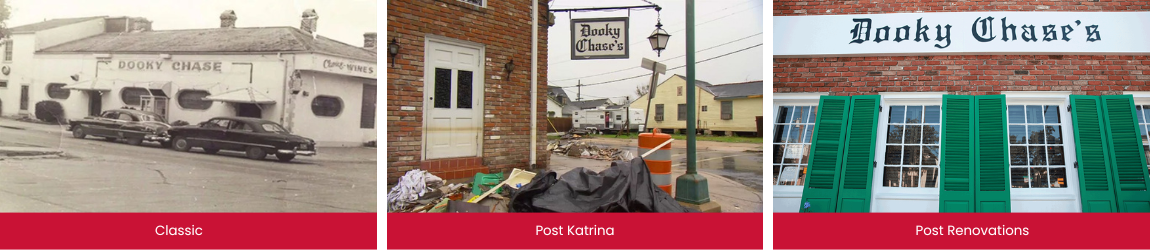
The new operation was designed to handle more customers. Yet the family set strict operating hours, not to discourage business but to ensure Leah, then in her 80s, wouldn’t work herself to death. Her work ethic was something regarded with a blend of awe and concern.
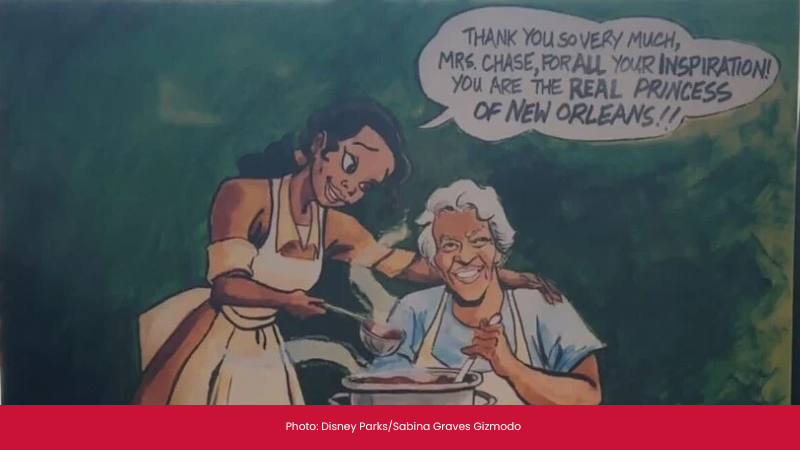
Her life story prompted Disney to base the main character of its animated film The Princess and the Frog on Chase. The feature tells the story of a street-wise princess who kisses a frog, only to discover he was actually a prince who’d been cursed.
Leah would work in the restaurant until a few days before an unrevealed ailment forced her into the hospital. She would die in June 2019 at the age of 96.
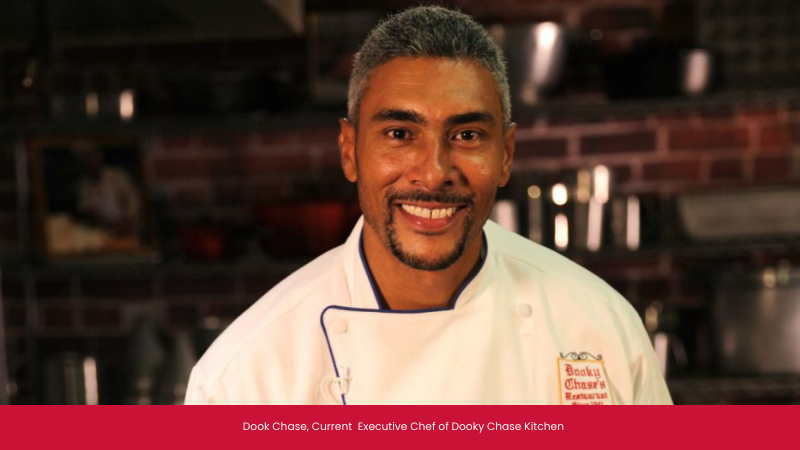
Dooky Chase remains open, run now by Leah’s grandson, Edgar “Dook” Chase IV.