Sponsored by Cargill, P&G Professional, and Unilever
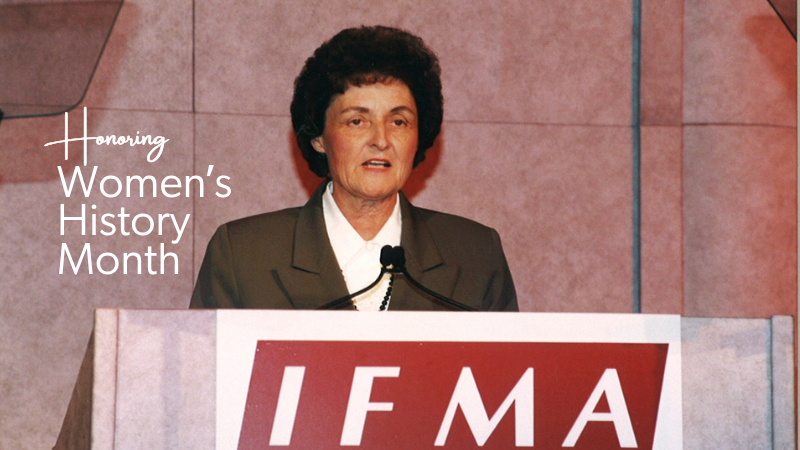
There's no record of Jackie Trujillo ever taking a tumble during her days as a roller-skating carhop in the mid-1950s. Even harder to find is any indication she was tripped up by whatever resistance kept women from scooting up the career ladder like their male counterparts during those days of heady industry growth.
Oh, sure, it was fine to let women work a kitchen station or take customer's orders. In the instance of a 17-year-old Trujillo, that meant running trays of burgers and fries from the kitchen of Harman Cafe in Salt Lake City to the driver's windows of the Chevies and Fords that filled its parking slots. The Utah native needed money if she wanted to attend college.
She was looking for a paycheck, not a restaurant career.
But a change in plan came in the unlikely form of Col. Harland Sanders, a former innkeeper with a string of filling stations in rural Kentucky. He would become globally famous as the founder of Kentucky Fried Chicken and its current iteration, KFC. But he might never have been anything more than an eccentric entrepreneur in a white suit and goatee had he not crossed paths with Trujillo and her boss, Leon "Pete" Harman, the Harman of Harman Grill.
A year before Trujillo had laced on her skates for the first time, Sanders had trekked to Salt Lake City with a pressure cooker, a proprietary batter recipe, and a business proposal for Harman. How would he like to add a fried chicken dish that was easy to execute but unsurpassed taste-wise? It had already garnered a following in Sanders' businesses back in Kentucky.
Harman liked what he heard. He liked what he tasted even more. On the strength of a handshake, he agreed to pay Sanders a nickel for every chicken he flavored with the Kentuckian's unique spice blend and "fried" in a pressure cooker a la the Colonel's formula.
But Harman bet on more than just a menu addition. He christened Sander's product "Kentucky Fried Chicken," after first considering "Utah Fried Chicken," and splashed the name in paint across his restaurant's exterior. A brand was born.
So, too, was a restaurant chain destined to grow into one of the globe's largest, with about 3,700 domestic stores and 26,000 additional units worldwide, virtually all franchised.
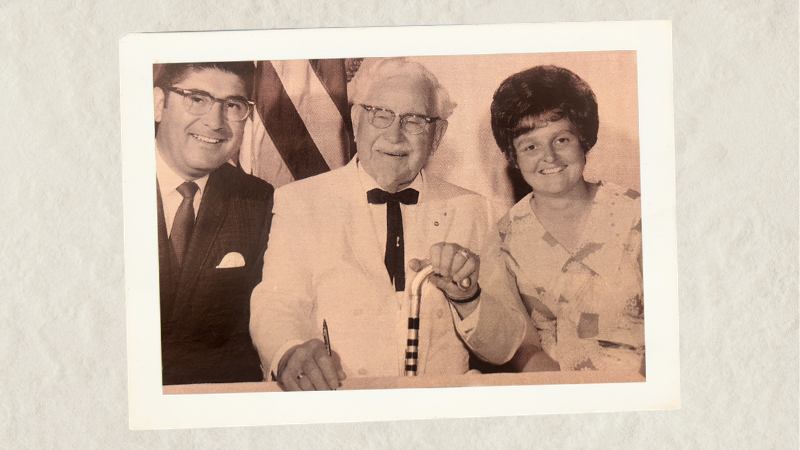
With considerable input from Trujillo, Harman's store served as the prototypical franchise. For a time, it was also the only franchise. But success would end that distinction. Harman alone would open an additional 300 stores.
Skating through the parking lot with trays of chicken balanced on her arm, Trujillo could see Harland's 11 herbs and spices were powering Harman's business to unimagined levels of success. What she didn't see was a plan for keeping the phenomenal growth from devolving into chaos.
The kitchen was struggling to keep up with the production demands, so she hung up her skates and shifted to the back of house. When the surge continued, she moved into a management post to keep the business from overheating. And when the opening of more restaurants looked like the natural next step, she dove into operations.
Trujillo developed a reputation as someone who would get things done regardless of the impediments.
Franchising was in its infancy at the time, and the relatively few restaurant brands expanding via that model often lacked today's standard forms of field support. Like an operations manual.
Trujillo drafted one that would become a reference for other franchisees as well as her employer, Harman Management. By 1963, it would be adopted as the chain's standard reference for running stores.
She would also give the system its prototypical training program. It became the key to Harman Management's reputation as an outstanding place to work.
Meanwhile, Harman Management continued to grow, and Trujillo ascended the ranks of the franchise. The one-time carhop would become an EVP in 1983, Co-chairman with Harman in 1987, and Chairman and CEO in 1995.
Her work for the KFC brand and franchise system elevated her to industrywide prominence.
Few women in the business could say the same at the time, a fact that wasn't lost on Trujillo. In 1988 she joined a handful of other female industry executives to form the Women's Foodservice Forum, an organization dedicated to fostering opportunities for their gender. Women made up the majority of industry employees at the hourly level, but remarkably few were rising like Trujillo into senior leadership positions.
Still a powerhouse today, the WFF paid tribute to Trujillo's groundbreaking career by naming its top honor the Jackie B. Trujillo Outstanding Soar Award. It's presented annually to companies that foster opportunity for the up-and-comers within their ranks.
The Utah native also plunged into the activities of the National Restaurant Association, the International Franchise Association, and, after Harman Management's expansion into California, the California Restaurant Association.
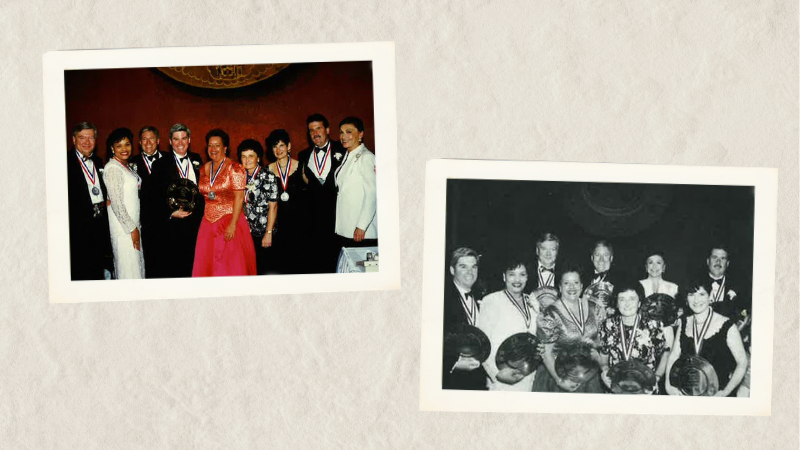
Trujillo would be honored with a prestigious Silver Plate award in 1997 by IFMA The Food Away from Home Association. She won in the Chain Limited Service category, designating her as the sector's top operator that year.
She's collected a trophy store's worth of other awards for her lifelong contributions to KFC, the franchising business, and the restaurant industry in general.
Trujillo retired as Chairman of Harman Management in 2006 but continued to serve for years as Chairman Emeritus. She continued to participate in industry events, and she proved that not all the industry's standout golfers were men.
She never did make it to college.