CHICAGO, July 23, 2026 —With a second cyclospora contamination now adding victims to the 11,500 believed to have been sickened by iceberg lettuce, two high-profile political figures have squared off in a debate about the nation’s ability to safeguard its food supply.
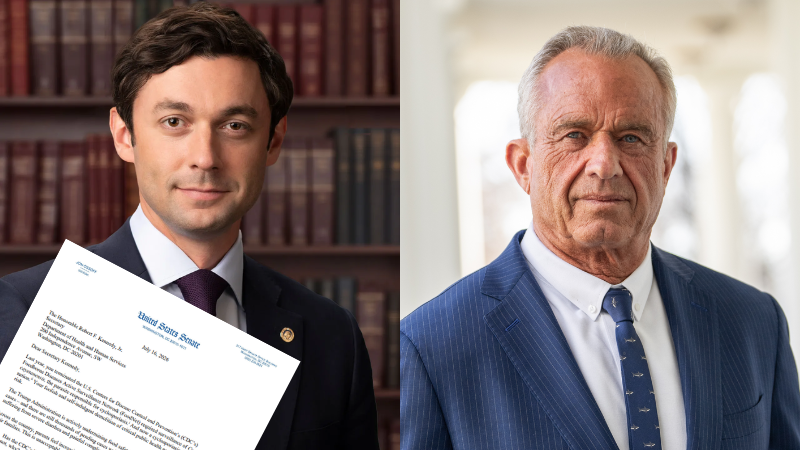
Sen. Jon Ossoff, a first-term Democrat from Georgia, has emerged as the frontman for those who believe the ongoing cyclospora contamination is a result of cutbacks at federal food-safety watchdog agencies.
In a letter to Robert F. Kennedy, Jr., secretary of the U.S. Department of Health & Human Services (HHS), Ossoff tied the cyclospora outbreak to HHS’ decision to drop a mandate that all cyclospora contaminations be reported to federal authorities.
The Department formerly monitored the disease via FoodNet, a program that graphs individual cases of foodborne illnesses across bellwether states to reveal when the seemingly isolated instances might be part of a larger contamination. The nine pathogens tracked via the 30-year-old program were cut down to two: salmonella and pernicious variants of E. coli. Instances of other outbreaks may still be recorded, but health officials in the field are no longer required to report the cases to federal trackers.
Officials said the reduction in scope reflected a redetermination of what pathogens were of greatest danger to the national public. The other contaminants continue to be tracked by state and local authorities.
Ossoff doesn’t buy the rationale. “Your foolish and self-indulgent demolition of critical public health programs puts Americans at risk,” he wrote Kennedy. “The Trump Administration is actively undermining food safety.”
Others note the staffs of the Food & Drug Administration (FDA) and the Centers for Disease Control & Prevention (CDC), two of the federal government’s key food safety watchdogs, have been cut by 20% and at least 25%, respectively. They contend that epidemic investigators and food safety specialists were among the 6,500 or so employees who were let go by the HHS divisions.
Kennedy publicly disputed that assessment, saying no surveillance personnel were cut.
He characterized the narrowing of FoodNet’s scope to redundancy with what local authorities are doing, and that the FDA and CDC are still tracking food contaminations using those lines of detection.
Contrary to the criticism HHS has drawn, "we do have the outbreak under control," Kennedy told ABC News.
A day later, the FDA revealed that it has discovered another cyclospora outbreak unrelated to the widespread contamination that was traced to iceberg lettuce. Details have yet to be posted on the agency’s website, but officials say lettuce is not the probable source.
Meanwhile, the FDA and the CDC continue to hunt for the specific cause of the larger outbreak. The focus remains iceberg lettuce, and authorities have not dropped their contention that it was likely what sickened customers of a handful of Taco Bells in five states. Those units have stopped using lettuce grown in Mexico and supplied by Taylor Farms, one of the nation’s largest supplier of salad greens.
Taylor has voluntarily pulled Mexican iceberg lettuce from its product mix, though cyclospora, a protozoan parasite, has yet to be found in any of the company’s produce. The FDA announced Sunday that it had indeed detected the pathogen in a lettuce sample from Taylor, but it later acknowledged that the finding was a “false positive” and apologized to the supplier.
The CDC says it has confirmed 4,000 cases of cyclosporiasis since Michigan health officials reported a flurry of cases starting July 1, and that 7,000 more cases are suspected but have yet to be confirmed through lab tests.
As Managing Editor for IFMA The Food Away from Home Association, Romeo is responsible for generating the group's news and feature content. He brings more than 40 years of experience in covering restaurants to the position.