CHICAGO, January 12, 2025 — IFMA The Food Away from Home Association launched a new benefit for members: A roundup of regulatory developments affecting the food-away-from-home business, including policy changes that are part of the Administration’s Make America Healthy Again (MAHA) initiative. The report is compiled and written by Dr. Joy Dubost, a renowned food scientist and registered dietitian with strong knowledge of what’s happening on the regulatory front.
FEDERAL UPDATES
HHS
Dietary Guidelines - HHS Secretary Kennedy, and USDA Secretary Rollins announced the release of the Dietary Guidelines for Americans, 2025–2030 (DGA), representing an update to federal nutrition policy. One in four Americans are directly impacted by the DGA through federal nutrition programs. The new Guidelines communicate an overarching message: focus on consuming real foods which is defined in the DGA as “foods that are whole or minimally processed and recognizable as food. These foods are prepared with few ingredients and without added sugars, industrial oils, artificial flavors or preservatives.” “These Guidelines return us to the basics,” Secretary Kennedy said. “American households must prioritize whole, nutrient-dense foods—protein, dairy, vegetables, fruits, healthy fats, and whole grains—and dramatically reduce highly processed foods. This is how we Make America Healthy Again.”
The Administration stated the purpose of the Dietary Guidelines is to make recommendations on optimal nutrition to educate Americans and impact federal procurement programs. In addition, HHS laid out the facts on why nutrition and health need to be urgently addressed. The US is currently experiencing a significant health challenge, with nearly 90% of health care spending allocated to treating chronic diseases, many of which are linked to dietary and lifestyle factors. Additionally, more than 70% of American adults are overweight or obese, and almost one-third of adolescents have prediabetes. Today begins the work of aligning those programs with affordable, whole, nutrient dense food,” Kennedy said in the White House briefing room. Rollins continued stating, “There is a lot of work to do. Nothing changes overnight, but as I think we've proven, this Administration moves very, very quickly … so you'll begin to see some real changes coming very soon.”
At a high level the new Guidelines recommend the following >>
Additionally, the Guidelines offer specialized advice for infants, children, adolescents, pregnant and lactating women, older adults, individuals managing chronic disease, and those following vegetarian or vegan diets, to support comprehensive nutritional needs at every stage of life. For individuals with certain chronic diseases a lower carbohydrate diet was recommended.
Interestingly, the new scientific report supporting these updated DGA recommendations also addresses the 2025 Dietary Guidelines Advisory Committee (DGAC) report, which was released before the Trump Administration began. This new report noted the previous DGAC report emphasized plant-based diets, deprioritized animal proteins, and supported high linoleic acid vegetable oils, proposing to reorder protein groups to feature legumes over meats. Previous recommendations favored plant-based fats, continued low-fat dairy guidelines, and did not clearly limit processed foods or added sugars for children, despite health trends and new evidence contradicting some positions. The former report prioritized flexibility over specific, measurable guidance. With this the Trump Administration determined that adopting the DGAC report would not meet the American public’s need for objective, evidence-based nutrition guidance. The new report proceeds with outlining which previous DGAC recommendations remained in the new DGA.
Overall Industry Impact & Impressions
Saturated Fats – Previous statements by Secretary Kennedy and FDA Commissioner Makary suggested that recommendations to limit saturated fat would be removed. However, the current recommendation still advises limiting saturated fat intake to less than 10% of daily calories. There appears to be a lack of alignment between this recommendation and the foods promoted, including animal proteins, butter, beef tallow, and full-fat dairy products. While the report acknowledges the need for further research on specific fatty acids, it also notes that eliminating highly processed foods from the diet would naturally reduce saturated fat consumption. The guidance regarding saturated fat remains unclear, raising concerns about whether Americans may inadvertently increase their intake and thus elevate their risk of cardiovascular disease.
Highly Processed Foods - The DGA urge Americans to "avoid highly processed, packaged, prepared, ready-to-eat, or other foods that are salty or sweet, such as chips, cookies, and candy that have added sugars and sodium (salt). Instead, prioritize nutrient-dense foods and home-prepared meals. When dining out, choose nutrient-dense options." As it relates to school meals significantly reducing added sugars and highly processed foods would necessitate substantial modifications, which presently depend on some processed products to provide affordable nutrition for millions of children. To date the Administration has barely mentioned the nutritional quality of school meals, however with the release of these new DGA school meals are likely to be the first area of focus for policy changes. Secretary Rollins noted during the press event school meals is “the single most important move forward.” Most schools lack the resources, staffing and infrastructure to drastically change their menus and do any sort of scratch cooking. One thing is clear, significant expansion of budgets to support an overhaul of school meals would need the support by Congress.
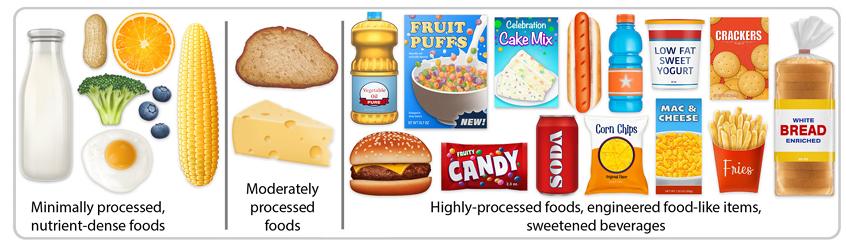
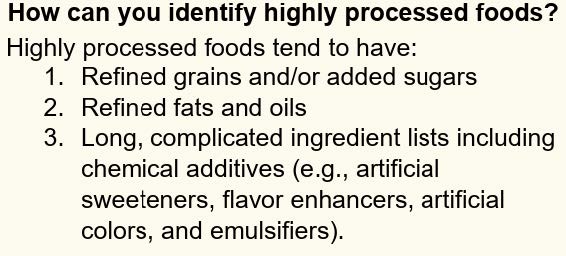
There was a concerned shift in terminology from ultra-processed foods (UPF) to highly processed foods (HPF) in the DGA. This was more likely intentional given FDA is currently developing a proposed regulatory definition for UPF. However, the DGA did clearly define what highly processed foods are - “For the purposes of this report, HPF are defined as any food, beverage, or engineered food-like item that is made primarily from substances extracted from food (e.g. refined sugars, grains, starches or oils) and/or containing industrially manufactured chemical additives.” Perhaps this gives us a glimpse into a future regulatory definition. Below are two images that were in the DGA Scientific report and suspect will be used in HHS media campaigns.
What about Fiber? The DGA takes a firm stand to “prioritize fiber-rich whole grains” and “significantly reduce the consumption of highly processed, refined carbohydrates, such as white bread, ready-to-eat or packaged breakfast options, flour tortillas, and crackers.” However, there are only two short mentions of fiber with no specific intake recommendations or sources in diet. More than 90 percent of women and 97 percent of men do not meet the recommended intakes for dietary fiber. Adequate intake of dietary fiber is associated with digestive health and reduced risk for heart disease, stroke, hypertension, certain gastrointestinal disorders, obesity, type 2 diabetes, and certain cancers.
Free From “Artificial” Ingredients – The DGA note to limit foods and beverages that include artificial flavors, petroleum-based dyes, artificial preservatives, and low-calorie non-nutritive sweeteners. Of course, this aligns to some of the Administration pressure on the food industry but now that it is in this federal policy report this will give states more ammunition to continue to ban these ingredients.
Protein – DGA now recommend protein intake at levels 50-100% higher than the standard recommended daily allowance (RDA). However, achieving daily protein with common foods often means going over saturated fat limits, creating conflicts in the recommendations. There is also promotion of animal-based protein sources versus plant based as previous iterations had recommended. In addition, there has been a significant rise in protein claims on packaged foods over the past year, likely linked to increased GLP-1 use. This raises the question: will even more protein claims eventually make consumers less attentive to the quality of their protein intake?
Added Sugars – Another confusing and somewhat conflicting message is on added sugars. The DGA states no amount of added sugars is recommended or considered part of a healthy diet, one meal should contain no more than 10 grams of added sugars. This limit of 10 grams per day is more stringent than previous recommendations of up to 50 grams per day of added sugars. In addition, the DGAs now recommend children under the age of 10 should not consume any added sugars.
Fats and Oils – Although there is no mention of seed oils but rather a vague recommendation to consume healthy fats that “prioritize oils with essential fatty acids like olive oil’’ which in fact does not provide all the essential fatty acids. So, one would need to include seed oils like canola, sunflower, and soybean to ensure adequate essential fatty acids in the diet, but there is no mention. In addition, the accompanying scientific foundation document dives into further details on the research of seed oils and raises concerns over consumption of linoleic acids due to vulnerability of peroxidation and toxin formation during cooking.
Summary - Overall, the Administration presents the guidelines as a significant shift in federal nutrition policy, asserting that previous recommendations prioritized corporate interests over scientific evidence and practicality. Nonetheless, several recommendations in the new DGA, including those concerning food group intakes, sodium, saturated fat, and added sugars, remain largely unchanged. Comparisons between the current DGA and those issued 20+ years (old food pyramid) ago support claims of substantial changes; however, the extent of these shifts depends on the reference point used. HHS intends to launch various media campaigns to communicate the DGA’s messaging. As these recommendations reach consumers, their ultimate impact on reducing chronic disease rates and making America healthy again remains to be determined.
Supporting Resources:
Eat Real Food – newly launched website
FactSheet
White House Press Event
Dietary Guidelines official site
Download the Scientific Foundation Appendices
Download the Scientific Foundation for the Dietary Guidelines for Americans
Download the Daily Servings Guide
USDA
SNAP - With the start of the new year, some states have begun banning SNAP purchases of certain foods like soda and candy. With this the
USDA released compliance guidance on December 30th with Indiana, Iowa, Nebraska, Utah, and West Virginia setting January 1 as their implementation date for these restrictions. After a waiver starts, SNAP retailers get a 90-day grace period before a tiered enforcement process—beginning with warnings and possibly leading to removal from the program—takes effect.
Food Security - The
USDA's 2024 Household Food Security report, released Dec. 30, showed U.S. food insecurity rose to 13.7% of households, with more children affected and severe food insecurity increasing to 5.4%. However, the report noted, “The 2024 prevalence of food insecurity was not statistically significantly different from the 13.5 percent in 2023 nor the 12.8 percent in 2022.” The agency said the estimate for very low food security was “statistically similar” to 2023 and 2022 rates. The release was delayed from October due to a government shutdown. In September, the USDA announced it would discontinue the annual hunger survey, citing redundancy and cost.
Updated Manufacturer Documentation - The updated
Product Formulation Statement (PFS) templates and samples are now available for food industry partners to utilize when demonstrating how processed food products may contribute to meal pattern requirements in Child Nutrition Programs (CNP). Manufacturers may voluntarily submit a PFS at the request of program operators; however, USDA does not approve manufacturer-provided PFS documents. The revised templates and samples offer clarity, include expanded instructions for manufacturers, and feature updated terminology. Notably, the new materials also provide a sample PFS for documenting crediting of food products containing meats/meat alternates (M/MA), alongside existing examples for grains and vegetables.
Other news
New SNA Report - The School Nutrition Association (SNA) released a new report highlighting the financial and operational difficulties school meal programs face in expanding scratch cooking and reducing ultra-processed food (UPF) use. As federal guidance urges limiting UPFs, SNA’s 2026 Position Paper asks Congress for increased funding and practical rules to help schools meet these standards. The SY 2025-26 School Nutrition Trends Report, based on surveys from 1,240 meal program directors, details challenges with scratch cooking, UPF reduction, meal pricing, student debt, menu trends, and overall operations.
Stay informed with our new page tracking key federal and state policies impacting food-away-from-home. Get timely updates on issues like ultra-processed food definitions and submit feedback to ensure our industry’s voice is heard.
Regulatory & Legislative Developments