CHICAGO, June 17, 2026 — If you don’t believe the Make America Healthy Again (MAHA) movement will figure into the upcoming midterm elections, consider the race underway for the governorship of Iowa.
Improving the health of Iowans is listed as a plank of the campaign platform for Rob Sands, currently state auditor of the agricultural jurisdiction and the Democratic candidate for the governor’s job.
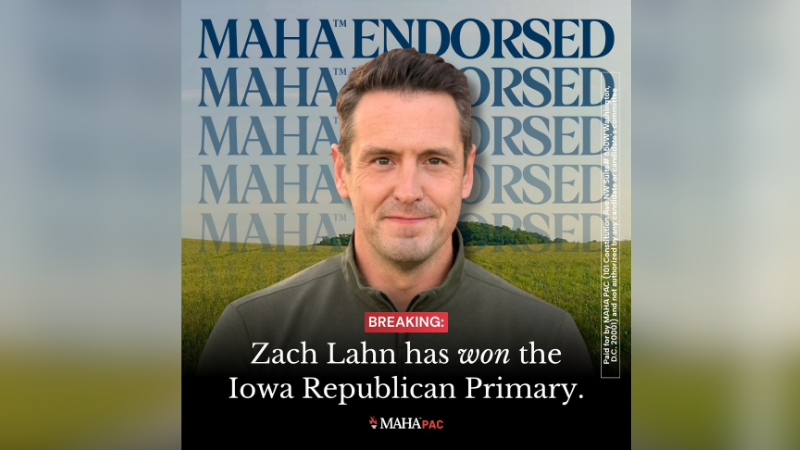
His opponent, farmer and businessman Zach Lahn, is very outspoken in his support for the MAHA movement. The Republican's stance earned him an endorsement from MAHA Action, a nonprofit that promotes the MAHA principles set forth by movement guru and U.S. Secretary of Health and Human Resources Robert F. Kennedy, Jr.
Lahn’s party has been an active supporter of MAHA, but that hasn’t blunted his criticism of certain principles that are fundamental to MAHA. For instance, Lahn has faulted the Trump Administration for not being more critical of using pesticides to kill harmful pathogens on farms and ranches.
Iowa’s current governor, Republican Kim Reynolds, was a strong supporter of the state’s Make America Healthy Again bill, which she signed into law last month. The measure embodies a number of the moves Kennedy has championed as ways of improving America’s health, such as eliminating certain dyes and additives from meals served in schools within the state.
Kennedy has praised Iowa for embracing components of his health push, calling the state a “laboratory of innovation.” Other aspects of Iowa’s program include limiting how long children can spend in front of a smart phone or computer screen, and permitting the use of ivermectin, a controversial medicine that kills lice and other parasites.
Both Lahn and Sands have stressed the need to address Iowa’s high rate of cancer cases, which is second only to Kentucky among the 50 states. According to the Iowa Cancer Registry, the state’s cancer incidence runs about 10% above the national average, with 87 of Iowa’s 99 counties surpassing the nationwide threshold.
Some political commentators have asserted that the Trump Administration has delayed certain MAHA disclosures to maximize or minimize the effect on the November midterm elections. For instance, a definition of ultra-processed foods was originally promised by MAHA proponents in April. Release of the standard would be the first step toward more aggressively regulating items that require minimum preparation before being served.
Now some administration officials are indicating that the definition could come toward the end of July at the earliest.
Nearly 4 of 10 (38%) American families support the principles set forth by MAHA, according to KFF.org, a website that presents health policy research. The proportion of supporters among Republican families is considerably higher at 8 of 10 (81%), KFF.org reports.
Among all-important independent voters, a third (34%) favor the principles set forth by Kennedy and his fellow MAHA supporters.