CHICAGO, December 15, 2025 — IFMA The Food Away from Home Association launched a new benefit for members: A roundup of regulatory developments affecting the food-away-from-home business, including policy changes that are part of the Administration’s Make America Healthy Again (MAHA) initiative. The report is compiled and written by Dr. Joy Dubost, a renowned food scientist and registered dietitian with strong knowledge of what’s happening on the regulatory front.
FEDERAL UPDATES
Executive Order - President Trump has issued an executive order to create food supply chain security task forces within the Justice Department and the Federal Trade Commission (FTC), aimed at addressing risks related to price fixing and anti-competitive practices, according to a statement from the White House. In the order, President Trump stated that his administration will assess whether anti-competitive conduct, particularly by foreign-controlled entities, contributes to increased living costs for Americans and will take appropriate measures to address any national security concerns related to food supply chains.
HHS
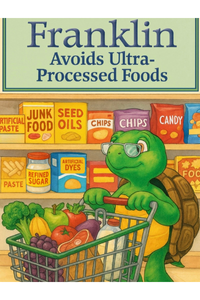
Dietary Guidelines - In a nod to the forthcoming announcement of the new Dietary Guidelines, which are anticipated to be released in January 2026 HHS released a meme via their social media channels parodying the popular Franklin series of children’s books. According to an HHS statement accompanying the meme, “Franklin avoids ultra-processed foods. A healthy diet starts with real, whole ingredients. Franklin wants to Make America Healthy Again. Be like Franklin.” Take notice of the background and what foods are listed as this may provide insight into the recommendations of the pending Dietary Guidelines.
Focus on Airports - Secretary Kennedy appeared at
an event hosted by Transportation Secretary Duffy at Ronald Reagan Washington National Airport. During the event, known as “Make Travel Family Friendly Again,” Secretary Kennedy said that airport security should be less physically invasive and demeaning, while also calling on airports and airlines to make facilities more family friendly. He also encouraged airports and airlines to offer healthier food choices for passengers. During the event Secretary Kennedy stated, “I fly typically on average 250 days a year in airports, and I can tell you that this is where healthy diets go to die. The food that’s available in the airport, a lot of it tastes very good, but it’s not very good for you. It’s deep-fried food, it’s sugar bombs, it’s ultra-processed foods — and all of them are going to leave you sicker than before you ate them.” As a reminder, the MAHA Commission report noted eating healthy at restaurants is a strategy to address childhood obesity and chronic disease.
New Appointment - Admiral Brian Christine was sworn in as the HHS Assistant Secretary for Health and Head of the U.S. Public Health Service (USPHS) Commissioned Corps. The USPHS Commissioned Corps, one of the nation’s eight uniformed services, is dedicated to protecting, promoting, and advancing the health and safety of the American people. More than 5,000 highly trained public health professionals—including physicians, nurses, pharmacists, engineers, and scientists—serve on the front lines of the nation’s health challenges. Public Health Service officers respond to natural disasters, public health emergencies, and urgent medical needs, providing expertise and care wherever it is needed most.
USDA
Announcement - USDA Secretary Rollins, HHS Secretary Kennedy, and CMS Administrator Dr. Oz announced the new Regenerative Agriculture Initiative (RAI) and six new state SNAP waivers that restrict certain food and beverage purchases. You can watch the press conference here.
SNAP Waivers Approved
- Six new waivers were granted to Hawaii, Missouri, North Dakota, South Carolina, Virginia, and Tennessee—totaling 18 approved states.
The USDA hasn’t released details about excluded food and beverage items for each state yet, but North Dakota and South Carolina have shared information on their waiver requests.
North Dakota: The state plans to start new SNAP restrictions by September 2026, as announced in a press release from Governor Kelly Armstrong. Items that will no longer be available for purchase with SNAP include:
- Soft drinks
- Energy drinks
- Candy and confections (cake decorations, gum, mints, licorice)
- Certain baking ingredients (almond bark, marshmallows, baking chocolate, chips)
- Chocolate-covered/candy-coated/honey-roasted nuts; caramel apples; trail mix with candy pieces
- Sweetened cereal bars and energy bars with a "supplemental facts" label
South Carolina: According to a press release from Governor Henry McMaster, the state's waiver will exclude candy, energy drinks, soft drinks, and sweetened beverages from SNAP.
Regenerative Agriculture Initiative
- USDA is investing $700 million in 2026 in a new “farmer’s first” pilot program under RAI, offering financial and technical assistance through Environmental Quality Incentives Program (EQIP) and the Conservation Stewardship Program (CSP). In FY2026, the Regenerative Pilot Program will focus on whole-farm planning that addresses every major resource concern—soil, water, and natural vitality—under a single conservation framework.
- Key requirements include: a whole-farm assessment and plan, at least one regenerative management practice, and soil testing at the beginning and end of contracts. Financial support for soil testing will be available.
Farm to School Grants
- Awards for the Farm to School Grant Program will be announced in spring 2026.
2025 Dietary Guidelines for Americans (DGA) - Secretary Rollins confirmed the DGA will be released in early 2026 and once again the DGA will prioritize whole, healthy, and nutritious foods, and suggest limiting “highly processed foods” and those high in sugar.
SNAP - At the
cabinet meeting last week, Agriculture Secretary Rollins announced that the USDA plans to take action against a number of Democratic states that have declined to provide sensitive data about SNAP participants to federal authorities. Back in February, the USDA asked all states to submit comprehensive information about their SNAP recipients—including social security numbers and addresses—to help prevent fraud, such as people applying for benefits in multiple states. While many states complied, 21 Democratic states (including large ones like California and New York), along with D.C., refused and are now challenging the request in court, expressing concerns that the data could be used for immigration enforcement purposes. In October, a judge issued a temporary halt to the USDA’s data request on behalf of these states, and the legal dispute continues. Secretary Rollins has increased pressure, stating at the President's Cabinet meeting, “As of next week, we will begin stopping the transfer of federal funds to these states until they comply and allow us to work together to combat fraud and protect American taxpayers.” If the USDA follows through with withholding administrative funds in the coming weeks or months, further litigation is likely. However, at the moment SNAP beneficiaries should not be concerned about losing their benefits due to this dispute.
Aid for Farmers - Agriculture Secretary Rollins announced that the Trump administration's financial aid for farmers will be released soon. The USDA and Office of Management and Budget (OMB) have set aside between $12 billion and $13 billion from taxpayer funds in the Commodity Credit Corporation (CCC). Last November, the CCC was replenished with $13.95 billion, up from just $4 billion. USDA noted that aid will mainly go to producers of soybeans, corn, and other row crops hit by financial losses and market changes. Specialty crop growers are also seeking inclusion due to economic hardships. With House Agriculture Chair G.T. Thompson (R-Pa.) noting specialty crops will have some relief as well.
FDA
Adoption of the Food Code - The FDA released its annual report titled 2024 Adoption of the FDA Food Code by State and Territorial Agencies Responsible for the Oversight of Restaurants and/or Retail Food Stores. The Food Code provides practical, science-based recommendations to help reduce risk factors linked to foodborne illness outbreaks at retail and foodservice establishments, making it a vital element in safeguarding the nation's food supply. The Office of Retail Food Protection at the FDA promotes and tracks the adoption of the FDA Food Code by state and territorial agencies overseeing restaurants and retail food stores across the United States. The 2022 Food Code, now in its 10th edition, is the latest version available. This new report details which state agencies and jurisdictions have adopted versions of the FDA Food Code as of 2024, including the Annexes and Supplement. Oversight of restaurants and retail food stores in the U.S. generally falls under the jurisdiction of state and local governments rather than federal authorities. The report features information on adoption status, methods of adoption, changes over time, and highlights areas where state agencies may be less stringent than the FDA Food Code. It also tracks the progression of Food Code adoption among 64 state agencies over a nine-year period, beginning with the first Food Code adoption annual report published for 2016, using data collected by FDA Retail Food Specialists.
Food Allergen Meeting - The FDA will host a virtual public meeting on food allergen thresholds on February 18, 2026, followed by listening sessions on February 19-20. These events will address recent scientific progress in food allergen thresholds, aiming to improve food safety, labeling, and consumer decision-making. The goal is to discuss strategies that support public health. In order to attend the listening sessions, participants are required to register by February 3, 2026. There will be a maximum number of participants for each session. Beginning February 18, 2026, a Regulations.gov docket will open for comments related to the event topic. The FDA will provide future communications on the comments process and timeline. More information about the public meeting is available on the meeting page.
Focus on Airports - Secretary Kennedy appeared at an event hosted by Transportation Secretary Duffy at Ronald Reagan Washington National Airport. During the event, known as “Make Travel Family Friendly Again,” Secretary Kennedy said that airport security should be less physically invasive and demeaning, while also calling on airports and airlines to make facilities more family friendly. He also encouraged airports and airlines to offer healthier food choices for passengers. During the event Secretary Kennedy stated, “I fly typically on average 250 days a year in airports, and I can tell you that this is where healthy diets go to die. The food that’s available in the airport, a lot of it tastes very good, but it’s not very good for you. It’s deep-fried food, it’s sugar bombs, it’s ultra-processed foods — and all of them are going to leave you sicker than before you ate them.” As a reminder, the MAHA Commission report noted eating healthy at restaurants is a strategy to address childhood obesity and chronic disease.
STATES
Texas - Food industry trade organizations have initiated legal action against the State of Texas regarding a newly enacted law that mandates warning labels for ingredients such as food dyes and preservatives. The plaintiffs contend that these labeling requirements infringe upon companies’ First Amendment rights and could potentially mislead consumers. The case is recorded as American Beverage Association et al v. Paxton, U.S. District Court for the Western District of Texas, No. 25-cv-00566.The parties bringing the suit—including the American Beverage Association and the Food Industry Association—petitioned a federal judge to halt the implementation of Section 9 of Texas Senate Bill 25 (“Make Texas Healthy Again”), which was signed into law in June. This provision obligates manufacturers to affix warnings on products containing any of 44 specified ingredients, including artificial additives, dyes, and chemicals, indicating that authorities in Australia, Canada, the European Union, or the United Kingdom have classified those ingredients as “not recommended for human consumption.” According to the complaint, the industry groups assert that the mandated warnings are “false and misleading,” as the referenced foreign governments do not universally designate these ingredients as unsuitable for consumption and continue to permit their use in many food products. In addition, the lawsuit claims the Texas labeling requirement contravenes the First Amendment’s free speech protections and the Commerce Clause by unduly impacting interstate commerce and further argues it is preempted by existing federal regulations.
MAHA
Impeachment - Rep. Haley Stevens (D-Mich.) filed impeachment articles against Secretary Kennedy yesterday as Democratic support for impeachment grows. Stevens, the most moderate candidate in Michigan’s Senate primary, introduced a 13-page impeachment resolution accusing Kennedy of "abuse of authority and undermining public health," citing research cuts and controversial actions. With Republicans controlling Congress, the effort is unlikely to succeed.
Endorsement - MAHA Action, a group supporting Kennedy's agenda, made its first state-level endorsement by backing Zach Lahn in Iowa's 2026 Republican gubernatorial primary. The group is expanding into state races as Republicans seek to maintain House control. Lahn, who invests in agriculture, real estate, and technology, promotes a Trump-aligned, socially conservative platform. MAHA Action highlighted Lahn's personal connection to pesticide issues. Five candidates are competing for the nomination. This group has a strong advocacy presence at the state level and are championing many of the MAHA friendly state bills including those focused on food and nutrition.
Georgia SB278 – Standards, Labeling, and Adulteration of Food - Proposed in 2025 by Senators Sally Harrell and Sam Watson The Corn Masa Nutrition Enhancement Act establishes new requirements for corn masa flour and wet corn masa products sold in Georgia, effective July 1, 2026. Manufacturers will be required to fortify corn masa flour with 0.7 milligrams of folic acid per pound, and wet corn masa products with 0.4 milligrams per pound, subject to specified tolerances. The legislation further mandates that these products display clear nutritional labels indicating folic acid content and identifying them as corn masa-based. Notably, these provisions do not extend to snack foods, cottage food operators, or food service establishments. MAHA advocates note this mandatory addition of synthetic folic acid to corn masa as stipulated by this bill affects consumer autonomy and traditional dietary practices, presenting a divergence from MAHA’s emphasis on whole foods and individual choice. MAHA supporters are being asked to advocate against this act.
Medicare - The Make America Healthy Again: Enhancing Lifestyle and Evaluating Value-based Approaches Through Evidence
(MAHA ELEVATE) Model is part of the Administration’s bold plan to reform the U.S. health system and tackle the chronic disease epidemic. This model will offer roughly $100 million over three years for up to 30 cooperative agreements aimed at promoting health and prevention among Original Medicare beneficiaries. Selected proposals will use evidence-based whole-person care strategies, such as functional or lifestyle medicine interventions not currently covered by Original Medicare. These methods are meant to complement, rather than replace, existing medical care for Medicare recipients. MAHA ELEVATE will also collect and analyze new data on cost and quality to guide future programs focused on healthy lifestyle habits, with the goal of reducing spending in Original Medicare. CMS plans to release a Notice of Funding Opportunity (NOFO) for the first cohort in early 2026, and the voluntary program will officially start on September 1, 2026.
NIH
Appointment - NIH Director Dr. Jay Bhattacharya
announced the appointment of Dr. Rick Woychik as the Senior Advisor for the “Make America Healthy Again” strategy at the NIH. According to Dr. Bhattacharya, “Dr. Woychik brings a distinguished record of scientific leadership and strategic vision. Since June 2020, he has served as Director of the National Institute of Environmental Health Sciences (NIEHS) and the National Toxicology Program (NTP).
Stay informed with our new page tracking key federal and state policies impacting food-away-from-home. Get timely updates on issues like ultra-processed food definitions and submit feedback to ensure our industry’s voice is heard.
Regulatory & Legislative Developments